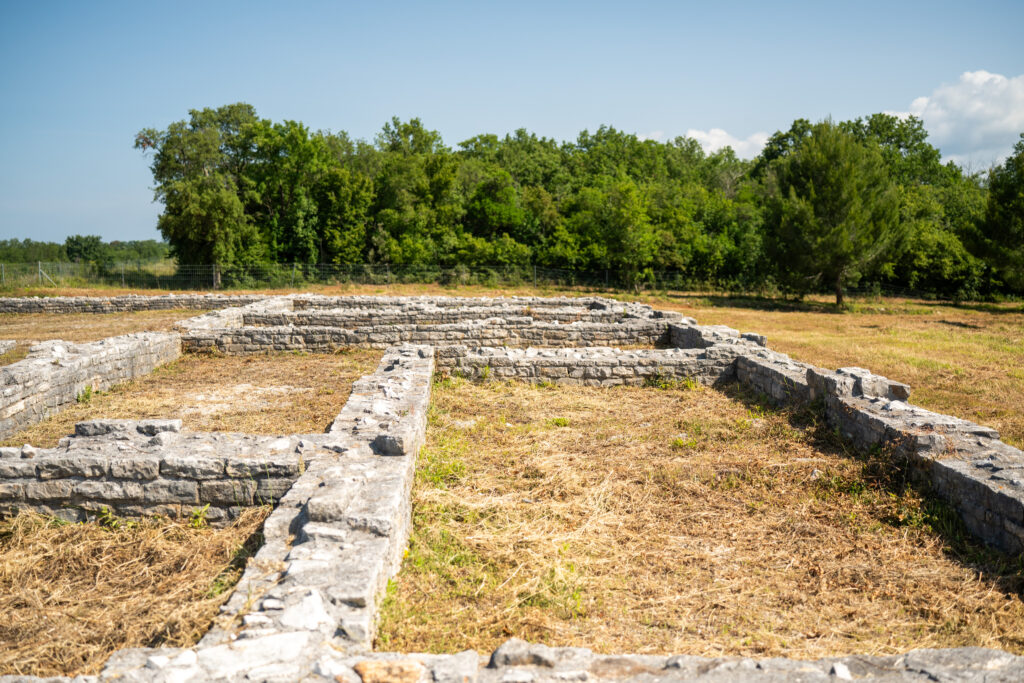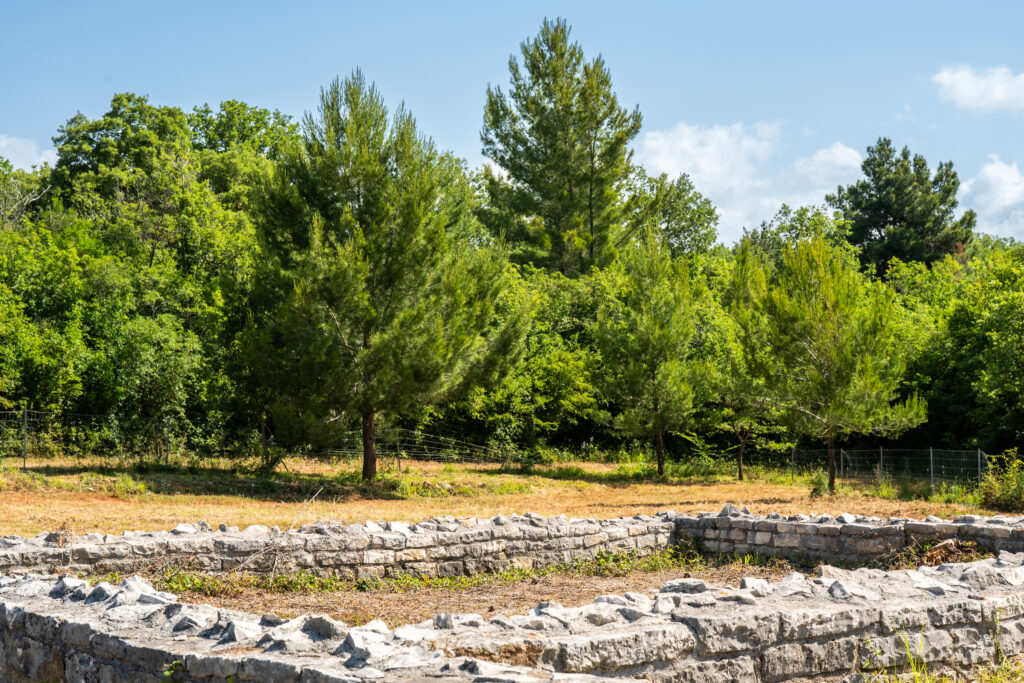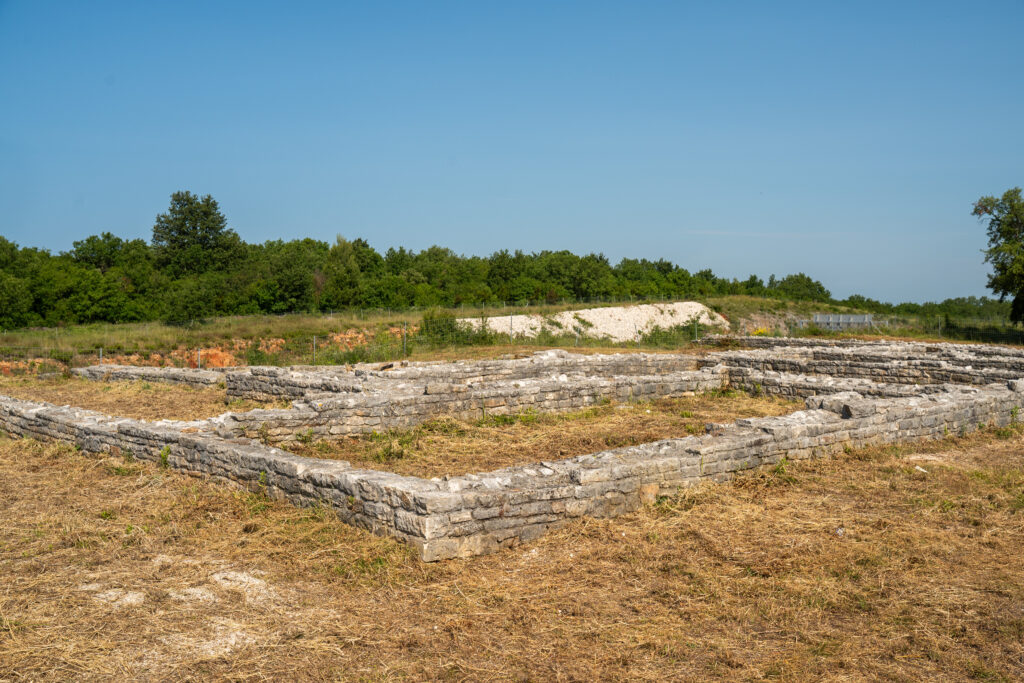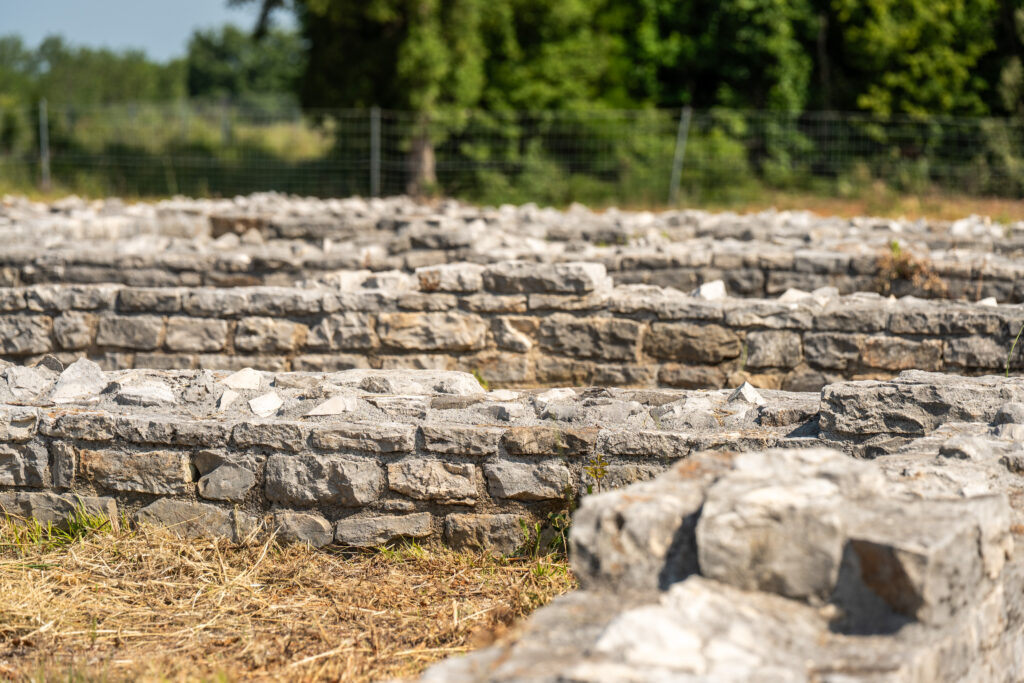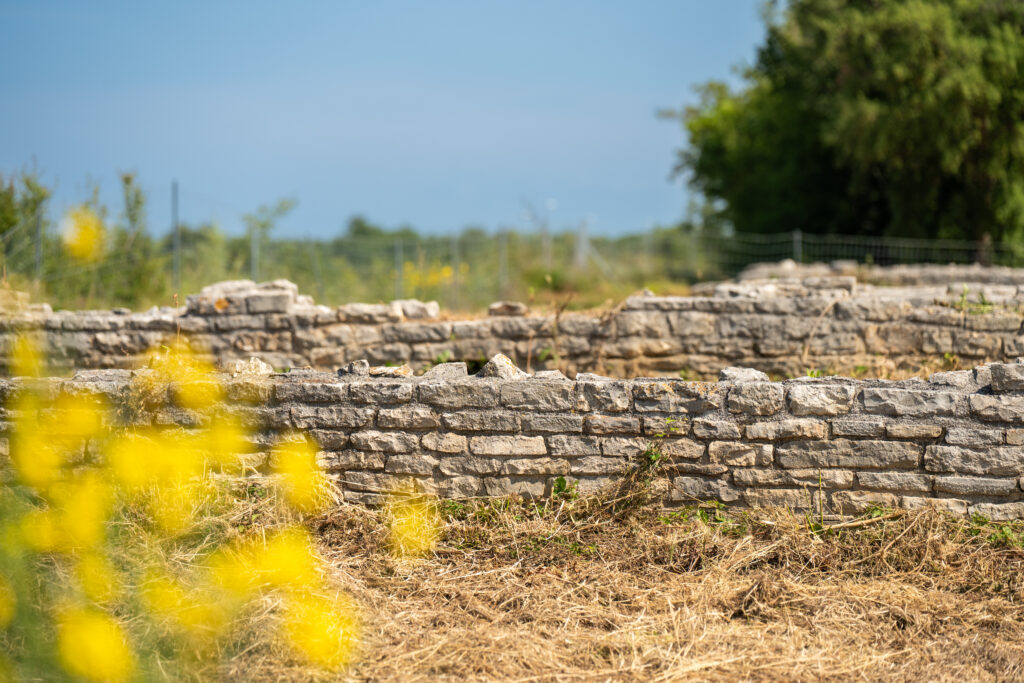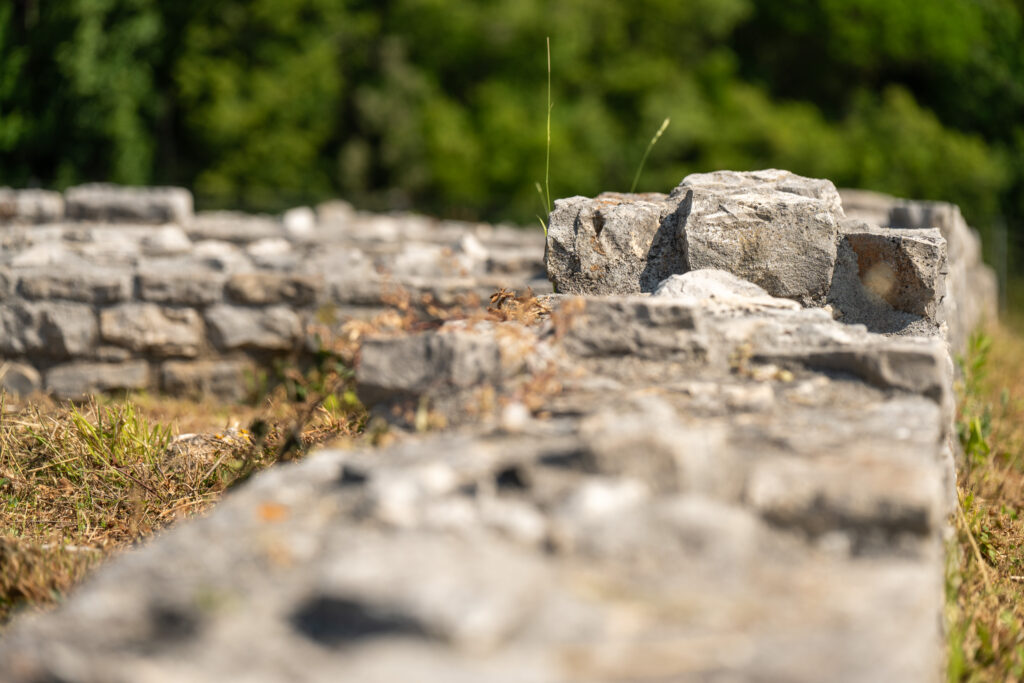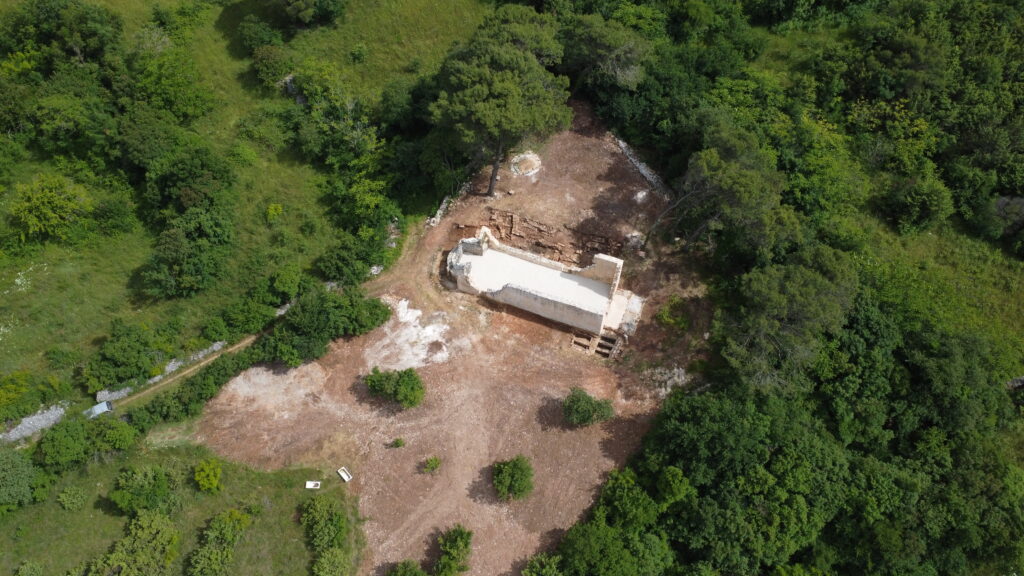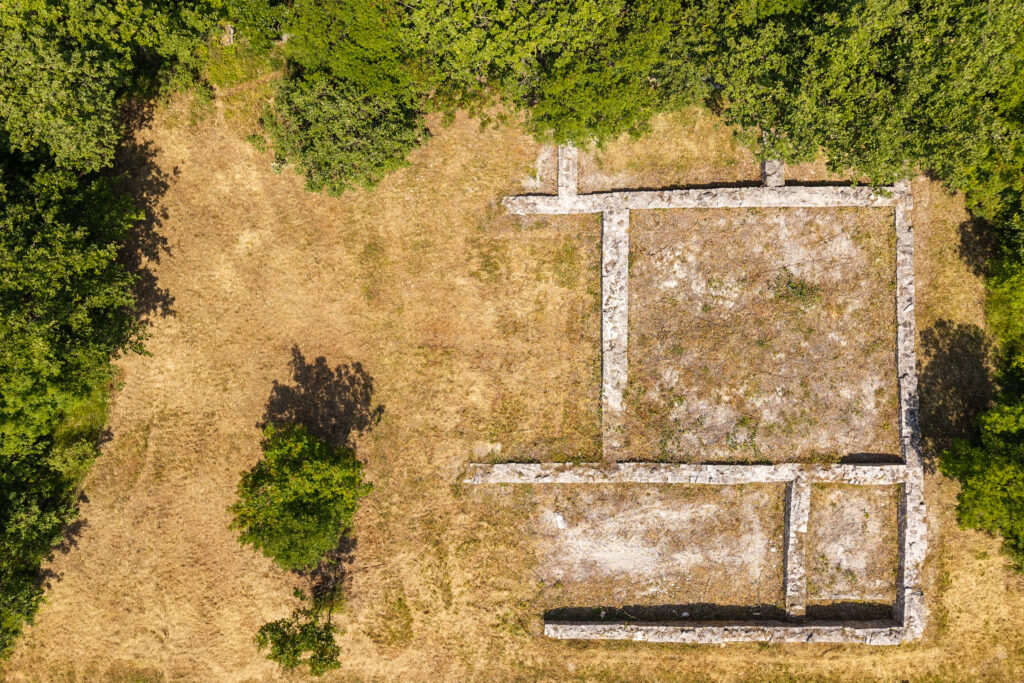
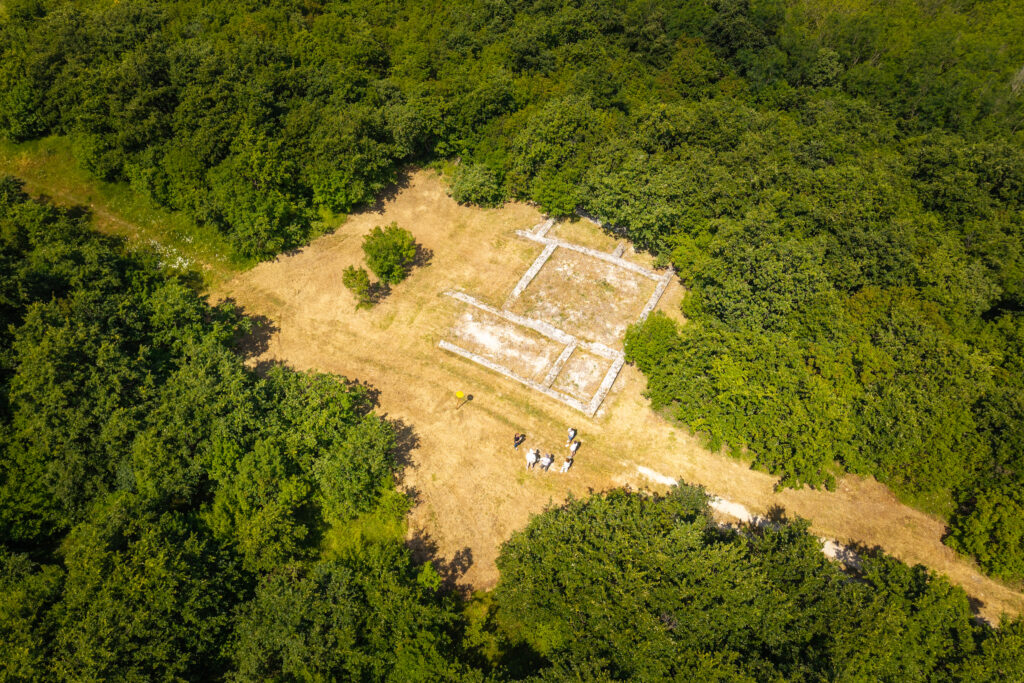
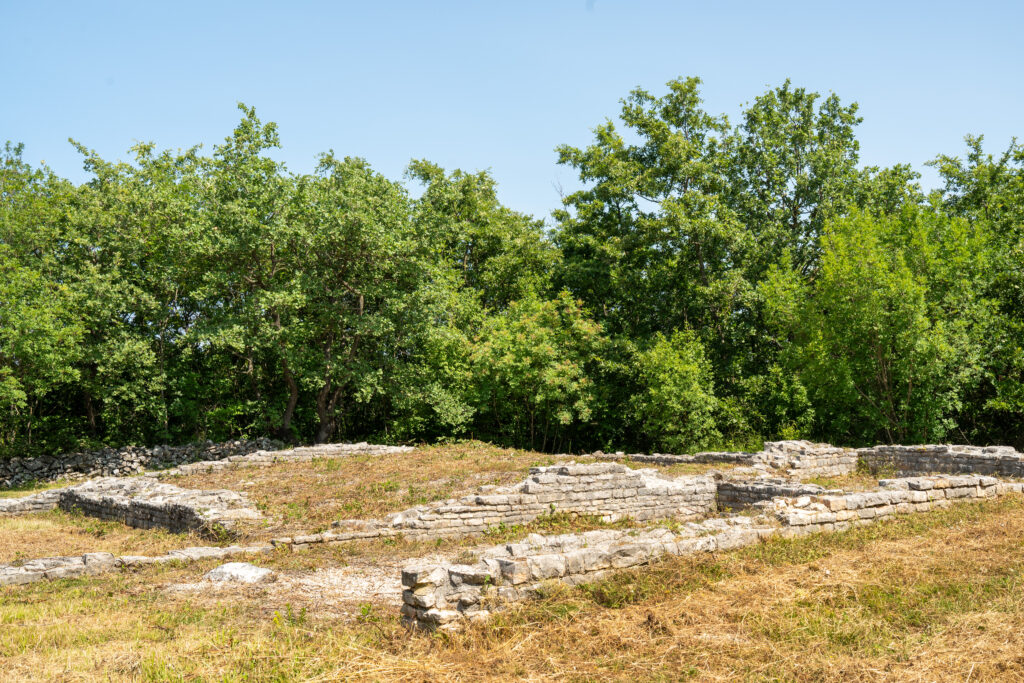
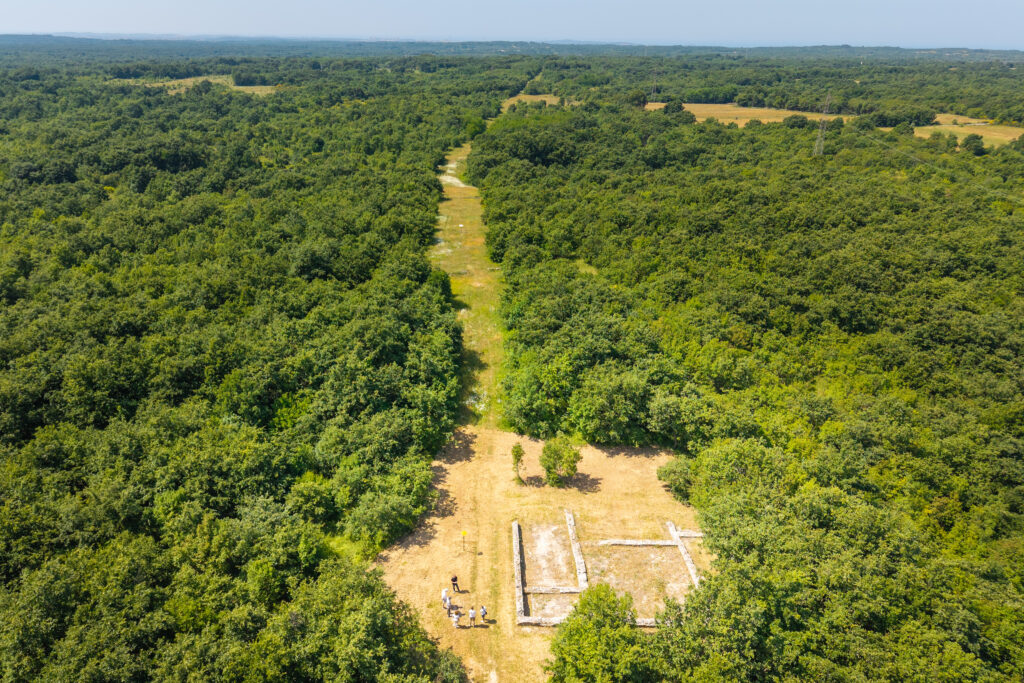
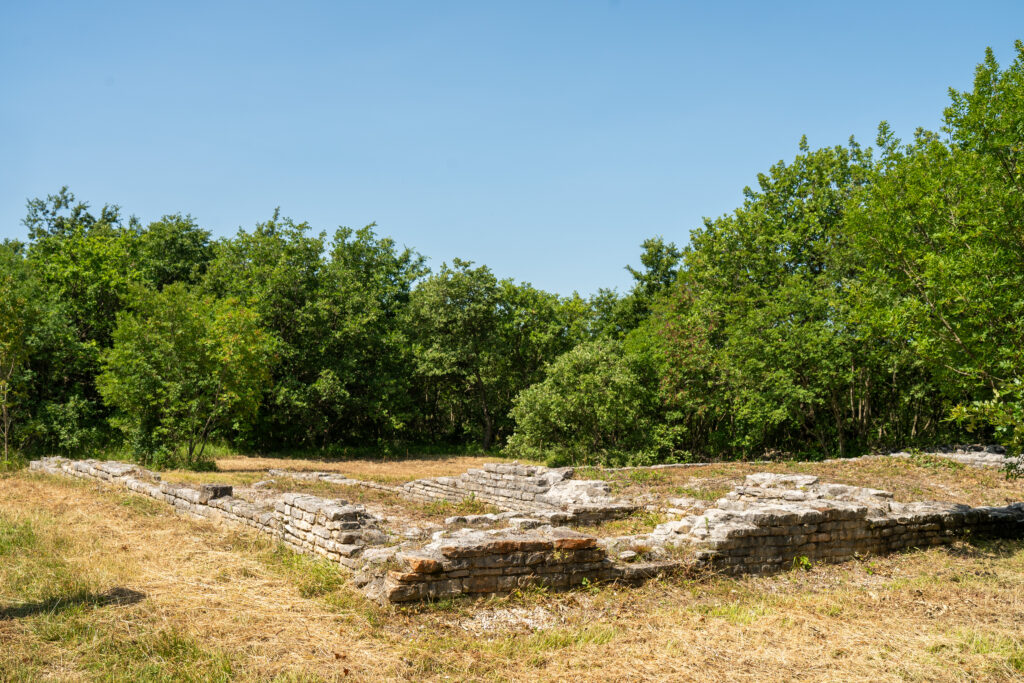
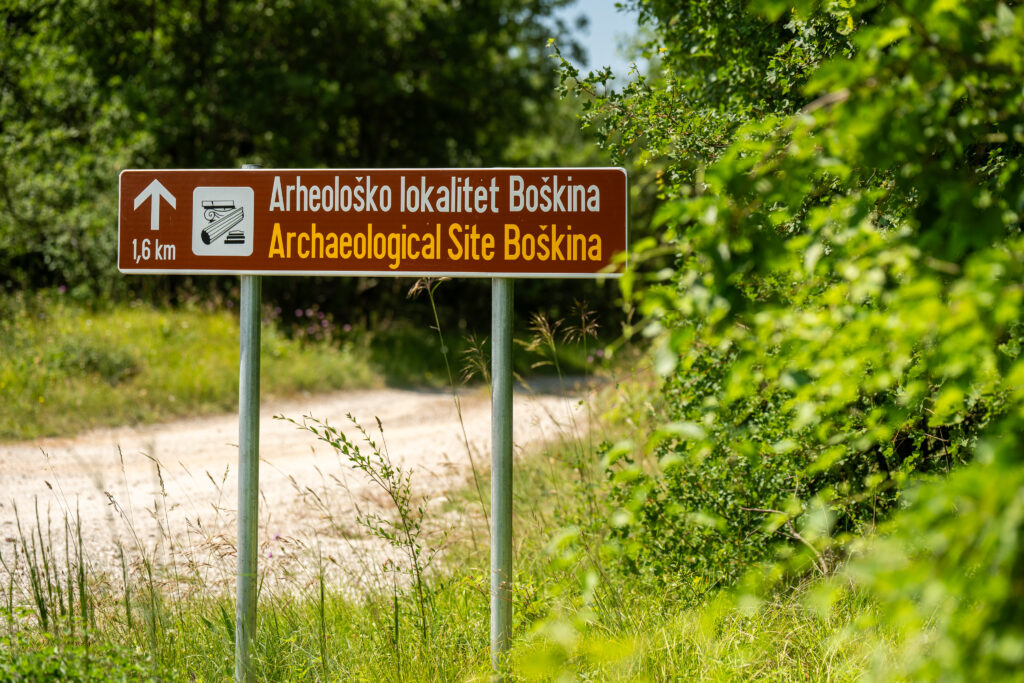
The Boškina archaeological site, located along the route of the Pula–Karlovac main gas pipeline, near the village of Krvavići, was discovered during archaeological excavations in 2005 and 2006. Research has shown that in the 1st and 2nd centuries, the area was occupied by a villa rustica — a rural Roman estate with farm buildings and associated land.
The excavated area, 150 meters long and 6.5 meters wide, intersected three architectural sections:
-
Southwestern part, where the foundations of less well-preserved auxiliary rooms and access roads were found,
-
Central part, best preserved, recognized as a residential–economic complex,
-
Northeastern part, where a section of the estate’s wide enclosing wall was identified.
According to the archaeological findings, the villa was built in the 1st–2nd centuries and, unusually for this type of structure, was inhabited for only about 150 years. Unlike many other Roman complexes, it did not have a long continuous period of use until late antiquity, but was abandoned early—likely due to the economic collapse of its owners. For this reason, the site is exceptionally well-preserved, with a condition that almost entirely reflects the 2nd century, providing archaeologists with valuable insight into the way of life at that time.
The remains of amphorae and evidence suggesting their local production indicate that the estate was engaged in viticulture, olive oil production, and livestock farming. The building, likely covering around 400 m², had two wings and formed a U-shaped layout, with a courtyard in the center and enclosing walls around the entire complex. It is believed that a Roman road led from the villa toward Vodnjan, used for transporting goods.
In the economic section, numerous artifacts were found that testify to production processes:
-
Two pithoi (large clay storage vessels),
-
A mortar,
-
Remains of a press and a stone channel,
-
Ceramic vessels,
-
Coins from the time of Emperor Vespasian,
-
A well-preserved oil press,
-
A bronze sewing needle.
Based on these findings, archaeologists conclude that the room was primarily used for processing olives and producing olive oil, one of the key economic activities in Roman estates in this area.